
The Evolving Landscape of American Relocation
A complex interplay of macro and micro-economic drivers—ranging from corporate presence to the search for affordability—continues to reshape the U.S. migration map. While the radical shifts seen in recent years have stabilized, one human element remains constant: Americans prioritize convenience. To minimize life disruptions, the majority of relocations still occur during the summer months and toward the end of the work week.

Economic Headwinds and the “Wait-and-See” Approach
Migration patterns have notably decelerated since the 2021 peak. While the general movement away from dense metropolises toward lower-cost regions persists, several factors are keeping Americans in place:
- Stagnant Job Growth: A steady decline in job creation throughout 2025 has increased market competition, resulting in fewer Americans willing to risk a move to a new city.
- Housing Market Uncertainty: Sustained high property prices and volatile mortgage rates have created a significant barrier to entry, discouraging potential movers from entering the market.
Industry-Driven Relocation Hubs
Despite the broader slowdown, specific sectors continue to draw talent to targeted regions:
- The AI Boom: The surge in Artificial Intelligence roles is revitalizing interest in major hubs like Washington D.C. and Atlanta, as tech professionals seek specialized opportunities.
- Healthcare Expansion: With an expected 13% growth rate through 2031, the healthcare sector is a primary driver for states like Florida and Texas, which currently boast the highest job concentrations in the industry.
- The Rise of Mid-Sized Cities: Manufacturing, finance, and tech growth are fueling “inbound” surges in cities like Greenville, SC, and Charlotte, NC, which offer a balance of economic opportunity and livability.
Peak Moving Seasonality
Moving habits reflect a desire for efficiency. June remains the most popular month for relocation, followed by July and May. When it comes to the calendar week, Americans favor Friday, Tuesday, and Wednesday to settle into their new homes.
Engaging professional moving company both short and long-distance relocations offers numerous advantages that enhance overall experience. Whether the move is local or out of state the expertise and provided by seasoned movers ensure a seamless transition, minimizing stress potential. Professional movers possess specialized knowledge in packing, loading, and transportation that safeguard belongings against damage during transit Their allows them to efficiently organize and execute within tight timeframes, saving clients time and effort. Additionally, reputable moving companies carry comprehensive insurance coverage, providing peace of in case of unforeseen incidents or accidents. This financial protection is particularly crucial when handling valuable or fragile items, professionals are trained to handle such possessions with utmost care.
The logistical complexities involved in out-of-state—such as navigating different state regulations, securing permits, and planning optimal routes—are expertly managed by these, alleviating the burden the client. Moreover, professional movers supply appropriate equipment like dollies straps, and that facilitate safe handling of heavy furniture and bulky items, reducing the risk of or property damage. Their team-oriented approach ensures every of the move is coordinated, from disassembling furniture to setting up in the location. For short-distance moves within a city or neighborhood, hiring professionals eliminates the physical strain and time-consuming tasks associated with DIY efforts. It also guarantees a quicker process, clients to settle their new space.
Out-of-state relocations benefit even more from professional assistance by comprehensive planning services optimize travel routes and schedules accommodating specific timing needs., employing experts reduces the likelihood of details such as proper labeling or fragile handling, which can lead to costly mistakes if attempted independently. The convenience of having a dedicated team manage all aspects of packing and unpacking cannot be overstated; it allows clients to focus on other essential tasks to their move or transition into a new environment. Ultimately choosing a professional moving company translates into a safer, more efficient, and less stressful relocation process—whether moving across town across state lines—making it an investment that delivers peace of mind and ensures belongings arrive intact and on time.
Generational Shifts in Homeownership
The profile of the American homebuyer is undergoing a significant transformation, according to data from the National Association of Realtors:
- Baby Boomer Dominance: This demographic now accounts for 42% of all homebuyers, asserting significant control over the market.
- Millennial Decline: Millennial buyers have dropped to 29% (a 9% decrease from 2024).
- Rental Preferences: Instead of pursuing suburban homeownership, younger generations are pivoting toward renting in mid-sized, walkable cities like Charlotte and Boise. These locales provide a high-tier lifestyle comparable to Seattle or San Diego but at a much more sustainable price point.
2025 Geographic Shifts: Why Americans are Changing Zip Codes
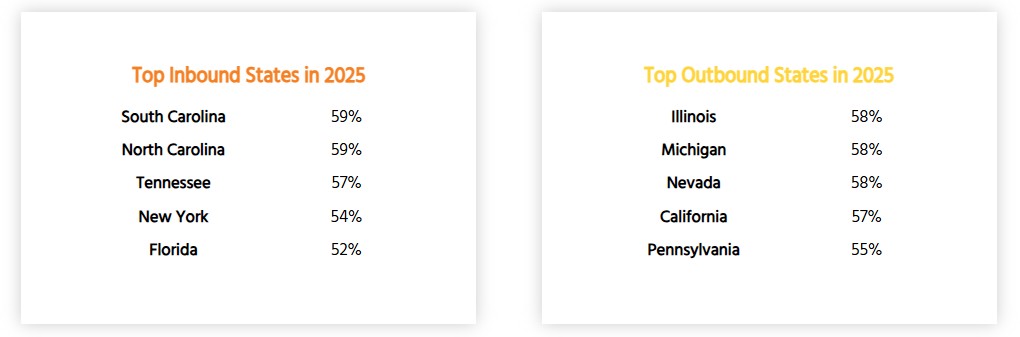
The American migration map is being redrawn by a mix of corporate mandates, industrial evolution, and a relentless search for affordability. Here is an analysis of the regions gaining traction and those seeing a notable departure of residents.
The New Growth Magnets: Top Inbound Destinations
A common thread among 2025’s fastest-growing regions is a balance of professional opportunity and a high quality of life.
- South Carolina’s Industrial Renaissance: Beyond its famous coastline, South Carolina has reinvented itself as a technology and manufacturing powerhouse. Greenville, in particular, has become a primary beneficiary of this economic stability, attracting families with its moderate climate and lower cost of entry for homeowners.
- The North Carolina Hybrid Model: Charlotte continues to act as a major lure for those in the high-stakes worlds of finance, healthcare, and tech. Interestingly, the state is also seeing a “permanent vacationer” trend, where remote workers have converted former seasonal getaways into year-round homes.
- The Tennessee Professional Surge: Offering a tax-friendly environment for everyone from retirees to recent grads, Tennessee is booming. Nashville’s evolution into a venture capital and healthcare tech hub has transformed it into a mandatory stop for ambitious young professionals.
- The New York Suburban Rebound: In a surprising twist, New York remains an inbound contender despite its price tag. The catalyst? Corporate “return-to-office” policies. Rather than moving into the city center, workers are flooding the surrounding suburbs, utilizing the robust rail systems to maintain access to Manhattan’s job market while seeking suburban space.
- Florida’s Triple Threat: The Sunshine State continues to lead for three core reasons: a lack of state income tax, zero taxes on retirement distributions, and an outdoor-centric lifestyle. This combination remains unbeatable for Baby Boomers looking to maximize their retirement dollars.
The Outbound Exodus: Primary Departure Zones
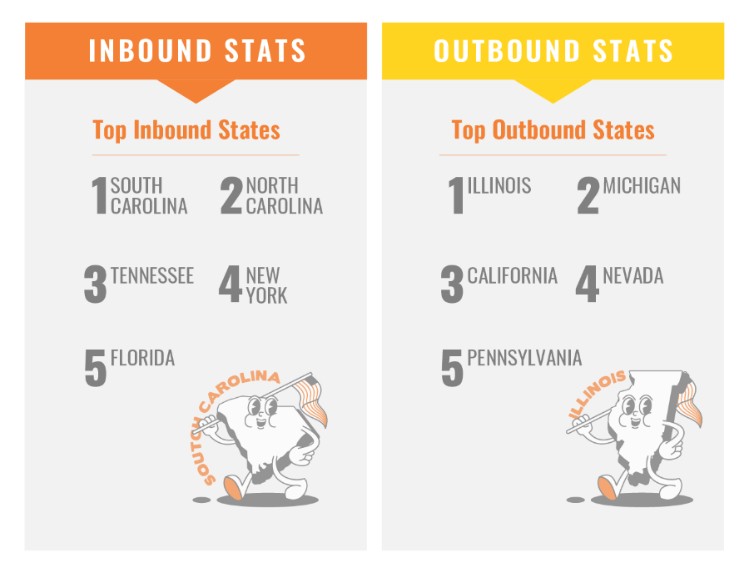
Conversely, several regions are struggling to retain residents as the economic “gravity” shifts elsewhere.
- Illinois and the Corporate Exit: Chicago is facing a challenging cycle. The departure of foundational employers like Boeing and Caterpillar has combined with high tax burdens and safety concerns, prompting many families to seek stability in more business-friendly states.
- California’s Regulatory Squeeze: The ongoing movement away from Los Angeles and San Diego is a direct result of the “cost of living ceiling.” Between aggressive tax structures and a hyper-regulated business environment, many top-tier employers—and their employees—are finding the California dream increasingly difficult to finance.
- Pennsylvania’s Transition Struggles: While historically an industrial leader, Pennsylvania has been slow to replace offshored manufacturing roles with modern equivalents. This lag in economic pivoting has left a vacuum in the job market, driving younger workers to relocate to more tech-centric states.
- Michigan’s Automotive Volatility: The Midwest’s affordability is being tested by industrial instability. Recent tariffs have hit the “Big Three” automakers hard, leading to significant layoffs at Ford and GM. For many Michigan families, the move is a necessity driven by the search for a more diversified job market.
- Nevada’s Price Paradox: Nevada proves that a lack of state income tax isn’t a cure-all. A sudden spike in housing prices and a tightening real estate market have made the state less competitive, pushing potential residents toward the relative bargains found in Arizona and New Mexico.
